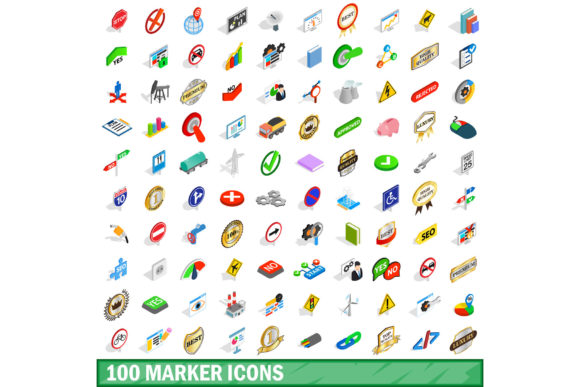
100 Marker Icons Set, Isometric 3d Style
In the evolving landscape of digital design, visual communication has shifted from flat, minimalist aesthetics to more immersive, spatial representations. Among the most compelling trends in this shift is the rise of isometric 3D style. This specific perspective offers a unique blend of technical precision and artistic depth, allowing designers to create complex scenes that remain clean, organized, and highly readable. For professionals seeking to elevate their projects, the 100 Marker Icons Set, Isometric 3d Style represents a significant resource. It provides a comprehensive library of vector illustrations that bridge the gap between functional interface design and engaging narrative visuals.
The relevance of such a set extends far beyond simple decoration. In an era where attention spans are short and user expectations for high-quality, polished graphics are higher than ever, having access to versatile, pre-designed assets allows creators to focus on strategy and storytelling rather than reinventing the wheel for every project. Whether you are a freelancer crafting a pitch deck, a marketer designing a landing page, or an educator creating instructional materials, the ability to quickly integrate cohesive, three-dimensional icons can dramatically improve the perceived value of your work.
The Evolution of Isometric Design in Modern Workflows
Isometric projection is not a new concept; it has roots in architectural drafting and engineering blueprints. However, its adoption in modern graphic design and user experience (UX) interfaces has exploded over the last decade. Unlike traditional one-point or two-point perspective, which can distort objects and create visual clutter, isometric drawing maintains parallel lines and consistent angles. This characteristic makes it exceptionally well-suited for illustrating complex systems, workflows, and data structures without overwhelming the viewer.
The transition from 2D to 3D in iconography reflects a broader change in how users interact with digital content. As screens become sharper and processing power increases, users are accustomed to richer visual experiences. Flat design dominated the early 2010s, prioritizing simplicity and scalability. While flat design remains relevant, there is now a growing demand for "depth" in interfaces. Isometric icons provide this depth without sacrificing the clarity required for quick comprehension. They add a layer of sophistication that signals professionalism and attention to detail, qualities that are crucial for brands trying to stand out in crowded markets.
The 100 marker icons set in isometric 3d style caters directly to this demand. By offering a curated collection of 100 distinct icons, it ensures consistency across a project. Consistency is key in design; when all elements share the same lighting, shadow, and perspective logic, the final output feels unified and intentional. This is particularly important for businesses that need to maintain brand integrity across multiple platforms, from mobile apps to printed brochures.
Why Vector Formats Matter for Scalability and Flexibility
A critical advantage of using a vector-based asset library, such as the formats included in this set—JPG, EPS, AI, PSD, PNG—is the ability to scale without losing quality. Raster images, like standard photographs, are made up of pixels. When you enlarge them, they become blurry or pixelated. Vectors, on the other hand, are defined by mathematical equations. This means you can resize an isometric icon from a tiny favicon to a massive billboard poster, and it will remain crisp and sharp.
The inclusion of multiple file formats addresses different stages of the design workflow:
- EPS and AI: These native Adobe Illustrator files are essential for professional designers. They allow for full customization of colors, shapes, and layers. If a brand’s primary color changes, a designer can easily update the icons to match without starting from scratch. The editable nature of these files supports iterative design processes, where feedback and adjustments are common.
- PSD: Photoshop files offer flexibility for those who work primarily in raster environments or need to apply specific filters and effects. They often contain layered compositions that make it easier to isolate individual components or adjust shadows and highlights manually.
- PNG and JPG: These formats are indispensable for web development and quick integration into presentation software. PNG files support transparency, which is vital for placing icons over various backgrounds without unsightly white boxes. JPG files, while compressed, are useful for final exports where file size is a concern, though they lack transparency.
For entrepreneurs and small business owners who may not have dedicated design teams, having access to these varied formats means they can collaborate effectively with external agencies or use templates in tools like Canva or PowerPoint with greater ease. The versatility of the 100 marker icons set ensures that it fits into almost any digital ecosystem.
Practical Applications Across Industries
The utility of isometric 3D icons transcends specific industries. Their structured, block-like appearance makes them ideal for explaining abstract concepts through concrete visuals. Here is how different groups can leverage this resource:
Marketing and Advertising
Marketers often struggle to convey complex product features or service benefits in a single glance. Isometric illustrations excel at breaking down these complexities. For example, a SaaS company might use isometric icons to illustrate the steps of a customer journey: a user signing up, interacting with a dashboard, and receiving a report. Each step can be represented by a distinct icon from the set, creating a visual roadmap that guides the audience through the value proposition. The 3D effect adds weight and importance to each step, making the process feel tangible and achievable.
Education and E-Learning
Educators and instructional designers are increasingly turning to interactive and visually rich content to engage students. Traditional text-heavy slides can lead to cognitive overload. By incorporating isometric icons, educators can create memorable visual anchors. For instance, in a science class, isometric models of cells, molecules, or laboratory equipment can help students visualize microscopic or abstract concepts. The 100 marker icons set likely includes a variety of objects that can serve as metaphors or direct representations, enhancing retention and understanding.
Tech and Startups
In the tech sector, investor pitches and product demos rely heavily on clear visual communication. Startups need to appear innovative and reliable. High-quality isometric graphics contribute to this perception. They suggest that the company pays attention to detail and invests in quality. A pitch deck featuring custom isometric illustrations of the technology stack or user interface stands out against generic stock photos. It tells investors that the founders understand the nuances of their product and have thoughtfully designed the user experience.
Freelancers and Agencies
For freelancers, time is money. Spending hours creating a single icon from scratch is inefficient when clients expect rapid turnaround times. Using a pre-made, high-quality set allows freelancers to deliver polished work faster. Moreover, because the icons are vectors, they can be customized to fit the client’s brand guidelines perfectly. This balance of speed and customization is a powerful competitive advantage in the freelance market.
Integrating Isometric Icons into Cohesive Design Systems
While having 100 icons is impressive, the real value lies in how they are used. To avoid a cluttered or chaotic look, designers should adhere to certain principles when integrating these assets:
- Maintain Consistent Lighting: Isometric art relies on a consistent light source. Most isometric sets assume a light coming from the top-left corner. Ensure that any additional elements you add to the scene follow this rule to maintain realism.
- Limit Color Palettes: While the icons may come in various colors, restricting the palette to two or three main colors helps unify the design. Use color to highlight important actions or information, rather than decorating every element.
- Balance White Space: Isometric icons are detailed and occupy space. Give them room to breathe. Overcrowding an illustration negates the clarity that isometric design aims to provide.
- Contextual Relevance: Choose icons that accurately represent the concept. An isometric icon of a "cloud server" should clearly look like cloud infrastructure, not just a fluffy cloud. Precision in representation builds trust with the viewer.
The 100 marker icons set, Isometric 3d Style is designed with these principles in mind. The variety within the set allows for nuanced storytelling, whether you need to depict logistics, healthcare, finance, or creative processes. By selecting icons that align closely with your narrative, you can create illustrations that are not only visually appealing but also functionally effective.
Looking Ahead: The Future of Visual Assets
As technology continues to advance, we can expect further integration of 3D elements into everyday digital interactions. Augmented Reality (AR) and Virtual Reality (VR) are moving beyond gaming into education, retail, and remote work. Isometric designs, being inherently spatial, serve as a perfect bridge between 2D screens and 3D environments. They prepare users for more immersive experiences by familiarizing them with depth and perspective in a controlled, understandable format.
Furthermore, the demand for accessible and inclusive design is growing. Clear, distinct icons aid accessibility by providing visual cues that complement text. For users with reading difficulties or those who process information visually, well-designed isometric icons can make content more approachable. The 100 marker icons set supports this trend by offering clear, recognizable symbols that enhance usability.
Ultimately, the choice to use a comprehensive asset library like this is an investment in efficiency and quality. It acknowledges that while creativity is paramount, execution matters just as much. By leveraging the 100 marker icons set in isometric 3d style, designers and creators can produce work that is not only aesthetically pleasing but also strategically sound. In a digital world saturated with content, standing out requires more than just good ideas; it requires excellent presentation. This set provides the tools to present those ideas with clarity, depth, and professional polish.
Whether you are updating a corporate website, creating social media campaigns, or developing educational modules, the versatility of isometric 3D icons offers a timeless solution to modern design challenges. Embracing these resources allows you to stay current with design trends while maintaining the unique voice and identity of your brand. The result is a body of work that resonates with audiences, communicates effectively, and endures in an ever-changing digital landscape.