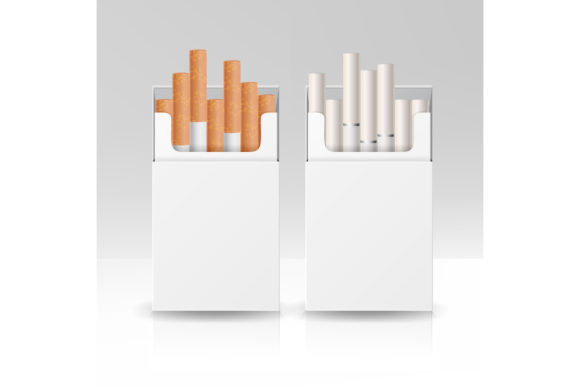
The Evolution of Digital Packaging: Mastering the Blank Pack Package Box of Cigarettes 3D
In the rapidly evolving landscape of digital design and product visualization, the ability to create realistic mockups has become an indispensable skill for professionals across various industries. Among the most requested assets in this domain is the Blank Pack Package Box of Cigarettes 3D. This specific asset class serves as a critical bridge between conceptual branding and tangible consumer products, allowing designers to visualize their work with unprecedented accuracy before physical production begins.
While the subject matter may seem niche, the underlying principles of packaging design, 3D rendering, and vector illustration are universal. Whether you are a graphic designer working on tobacco branding, a marketer creating advertising campaigns, or a student learning about industrial design, understanding the utility of these templates provides significant value. The availability of high-quality formats such as JPG and EPS further expands the versatility of these resources, ensuring they can be integrated into diverse workflows ranging from quick social media previews to high-resolution print preparations.
Understanding the Core Asset: What Is a Blank Pack Template?
To appreciate the significance of a Blank Pack Package Box Of Cigarettes 3D Vector Template For Design, one must first understand what constitutes a "blank" template in the context of digital asset creation. Unlike pre-branded images that feature specific logos or color schemes, a blank template presents a neutral canvas. It retains the structural integrity, lighting, shadows, and perspective of a real-world object but strips away proprietary branding elements.
This neutrality is its greatest strength. For a designer, it means the ability to overlay custom artwork without fighting against existing visual noise. The term "3D" indicates that the object is rendered with depth, volume, and realistic surface textures, distinguishing it from flat, two-dimensional illustrations. When combined with vector capabilities, as seen in EPS files, the template allows for scalable manipulation, ensuring that the final output remains crisp regardless of the resolution required.
The Technical Distinction Between 3D Renders and Vectors
A common point of confusion arises when terms like "3D" and "Vector" are used together. In the context of the Blank Pack Package Box of Cigarettes 3D, these often refer to complementary aspects of the same workflow. A true 3D model exists in a three-dimensional space within software like Blender, Cinema 4D, or Adobe Dimension. These models can be rotated, lit, and textured dynamically.
However, many templates provided for immediate use are rasterized images (like JPG) derived from 3D renders. They offer photorealism but lack editability at the structural level. Conversely, the vector component (EPS) typically refers to the layout guides or the editable artwork layers that sit atop the background. Some advanced templates provide both: a photorealistic JPG background for context and an EPS file containing the editable box structure, allowing designers to manipulate the geometry or apply smart objects directly onto the surface. Understanding this hybrid nature is crucial for maximizing the utility of the asset.
Practical Applications Across Industries
The applications for a Opened Pack Of Cigarettes template extend far beyond the tobacco industry itself. While the primary use case involves cigarette packaging, the structural design of these packs—rigid boxes with sliding drawers or hinged lids—is frequently adapted for other luxury goods, electronics, and collectibles. Here is how different professional groups leverage these assets.
- Graphic Designers and Branding Agencies: The primary users of these templates are those tasked with creating brand identities. A designer can take a client’s logo and color palette and apply it to the Blank Pack Package Box of Cigarettes 3D to create a presentation-ready mockup. This allows clients to see how their branding interacts with the physical form factor of the product, including how text wraps around edges and how foil stamping might appear under specific lighting.
- Marketing and Advertising Professionals: In digital advertising, time is money. Creating a physical prototype of a package for a photoshoot is expensive and slow. Using a high-fidelity 3D template allows marketers to generate campaign imagery in hours rather than days. An Opened Pack Of Cigarettes view is particularly powerful for advertising because it reveals the interior, suggesting accessibility and premium quality.
- Educators and Students: In design schools, students learn the importance of shelf presence and unboxing experiences. Templates provide a safe environment for experimentation. Students can test bold typography, unconventional layouts, and color theories without the risk of wasting materials or needing access to industrial printing equipment.
- Game Developers and Virtual Environments: For creators building virtual worlds, realistic props are essential for immersion. A detailed 3D model of a cigarette pack, complete with accurate dimensions and textures, adds realism to urban environments, cyberpunk settings, or historical simulations. The vector components can also be used for UI elements or inventory icons within the game interface.
The Importance of File Formats: JPG vs. EPS
The versatility of any design asset is heavily dependent on the file formats available. The combination of JPG and EPS in a single package offers a balanced approach to usability and flexibility.
JPG: Speed and Visual Context
Joint Photographic Experts Group (JPG) files are raster-based images known for their compatibility and relatively small file sizes. In the context of a Blank Pack Package Box of Cigarettes 3D template, the JPG file serves as the visual foundation. It provides the lighting, shadows, and texture details that make the object look real. Designers can quickly drop this image into any project to gauge the overall aesthetic. However, JPGs are not ideal for heavy editing because they lose quality when resized or if compression artifacts become visible.
EPS: Precision and Editability
Encapsulated PostScript (EPS) is a vector format that uses mathematical equations to define shapes, lines, and curves. This means an EPS file can be scaled to any size without losing clarity. For packaging design, this is critical. When designing for print, precision is paramount. The EPS component of the template often includes the die-line—the blueprint of where the box will be cut and folded. By working in EPS, designers ensure that their artwork aligns perfectly with the physical manufacturing process, avoiding costly errors during production.
Furthermore, vector graphics allow for easy color adjustments. If a client decides to change the brand color from blue to red, doing so in a vector file is instantaneous. In a raster JPG, the designer would need to manually mask and recolor every instance of blue, a tedious and error-prone process.
Design Considerations for Realistic Mockups
Simply placing a logo on a Blank Pack Package Box of Cigarettes 3D does not guarantee a professional result. To achieve a truly convincing mockup, designers must consider several key factors related to materiality and perception.
Surface Texture and Finish
Packaging is rarely just flat ink on paper. Modern packaging often features matte finishes, glossy spot UV coatings, embossing, or foil stamping. High-quality templates simulate these effects through subtle variations in lighting and reflection. When applying your design, it is important to respect these cues. For example, if the template suggests a matte finish, avoid adding overly shiny overlays unless the design specifically calls for a contrasting gloss effect. The interplay between light and texture gives the object its weight and reality.
Typography and Hierarchy
Cigarette packs, due to regulatory requirements in many countries, have specific areas reserved for health warnings and legal text. This constraint actually forces designers to be creative with the remaining space. A good design balances mandatory information with brand identity. When using a template, pay attention to the curvature of the box. Text placed on the curved side panels should follow the contour of the surface to maintain realism. Most advanced templates include warp tools or smart object layers that automatically distort text to match the perspective of the 3D model.
The Impact of the "Opened" State
An Opened Pack Of Cigarettes introduces a dynamic element to the composition. It implies action and usage. The interior of the pack, often lined with foil or colored paper, becomes part of the visual narrative. Designers should consider the contrast between the exterior branding and the interior lining. A stark white interior can make colorful exterior designs pop, while a metallic foil interior can enhance the perception of luxury. This detail is often overlooked but significantly contributes to the overall impact of the mockup.
Workflow Integration and Best Practices
Integrating these templates into a daily workflow requires a systematic approach to ensure efficiency and consistency. Here is a recommended workflow for utilizing a Blank Pack Package Box Of Cigarettes 3D Vector Template For Design.
- Assessment and Selection: Begin by reviewing the available templates. Check the resolution of the JPG preview and the complexity of the EPS layer structure. Ensure the perspective matches your intended final composition.
- Preparation of Artwork: Before opening the template, prepare your logo and design elements in a separate vector file. Organize your layers clearly. This prevents clutter when importing into the main template file.
- Integration via Smart Objects: If using Photoshop or similar software, utilize Smart Object layers. This allows you to double-click the placeholder, paste your design, save, and have the changes update automatically on the 3D surface. This non-destructive method preserves the original lighting and shadow data of the template.
- Refinement and Detailing: After applying the design, inspect the edges and corners. Use layer masks to refine any clipping issues. Adjust the opacity or blend modes of your design layer if the template’s lighting suggests a specific interaction between the ink and the substrate.
- Export and Presentation: Export the final image in high-resolution JPG for digital presentations. If the template includes an EPS version of the final composite, export that for print-ready needs. Always include multiple angles in your presentation to give stakeholders a comprehensive view of the design.
Future Trends in Packaging Visualization
The field of packaging design is moving towards greater interactivity and sustainability. As digital tools evolve, we are seeing a shift from static 3D renders to real-time 3D experiences. Imagine a customer scanning a QR code on a website and viewing a Blank Pack Package Box of Cigarettes 3D model that they can rotate and customize in real-time on their mobile device. This level of engagement is made possible by advancements in WebGL and browser-based 3D engines.
Additionally, the focus on sustainability is influencing design choices. Templates are increasingly being designed to reflect eco-friendly materials, such as recycled cardboard textures or minimalist designs that reduce ink usage. Designers who master these templates early will be well-positioned to adapt to these trends, offering clients solutions that are not only visually appealing but also aligned with modern environmental values.
Conclusion
The Blank Pack Package Box of Cigarettes 3D and its associated vector templates represent more than just a convenient tool; they are a testament to the sophistication of modern digital design workflows. By providing a realistic, editable, and versatile canvas, these assets empower creators to bring their ideas to life with speed and precision. Whether used for professional branding, educational purposes, or artistic exploration, the ability to seamlessly integrate 2D creativity with 3D realism is a valuable competency in today’s visual economy. As technology continues to advance, the relevance of these high-quality templates will only grow, serving as foundational elements in the creation of compelling product experiences.