100 Sea Life Icons Set: A Comprehensive Evaluation for Designers
Visual communication in the digital age relies heavily on efficient, scalable, and aesthetically pleasing assets. For designers working on projects related to marine biology, ocean conservation, travel, or aquatic themes, finding a cohesive set of icons is often a time-consuming task. The 100 Sea Life Icons Set emerges as a comprehensive solution designed to streamline this process. This collection offers a vast array of marine-themed illustrations, available in both standard vector formats and specialized isometric 3D styles.
Evaluating whether this specific asset pack aligns with your project requirements involves understanding its technical specifications, stylistic versatility, and practical applications. This article provides an objective analysis of the 100 Sea Life Icons Set, helping you determine if it is the right tool for your next design initiative.
Understanding the Asset Collection
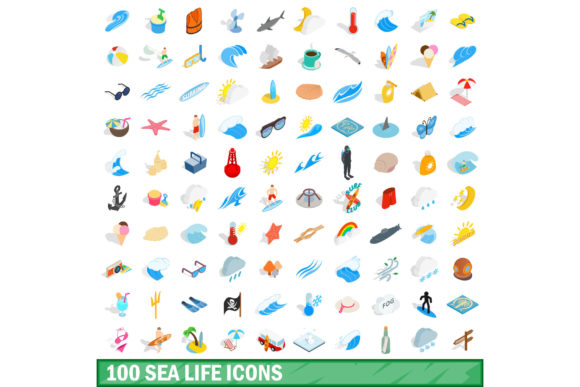
At its core, the 100 Sea Life Icons Set is a curated library of graphical elements representing various aspects of marine ecosystems. Unlike generic icon packs that may include random sea creatures, this set focuses specifically on aquatic life, providing a thematic consistency that is crucial for professional branding and user interface (UI) design. The collection typically includes representations of fish, crustaceans, mollusks, marine mammals, coral reefs, and underwater equipment.
The value proposition of this set lies in its dual-format availability. Designers can choose between traditional flat vector illustrations and isometric 3D renditions. This duality allows for greater creative flexibility. Flat icons are ideal for minimalist interfaces, while isometric 3D icons add depth and realism, making them suitable for infographics, educational materials, and premium web designs.
Technical Specifications and File Formats
One of the primary considerations for any designer when purchasing or downloading an icon set is file compatibility. The 100 Sea Life Icons Set addresses this by offering a wide range of formats, ensuring usability across different software environments and output needs.
- EPS and AI: These vector formats are essential for scalability. They allow designers to resize icons without losing quality, which is critical for responsive web design and print media. The EPS format ensures broad compatibility with legacy design software, while AI files are native to Adobe Illustrator, offering full editing capabilities for paths and colors.
- PSD: The inclusion of Photoshop files is particularly valuable for the isometric 3D style. PSD files often contain layered compositions, allowing designers to adjust shadows, lighting, and individual components within the 3D model. This level of control enables customization to match specific brand palettes or visual tones.
- PNG and JPG: Raster formats like PNG and JPG provide immediate usability for web developers who need ready-to-use images. PNGs are preferred for their transparency support, allowing icons to blend seamlessly into various backgrounds. JPGs offer smaller file sizes for faster loading times, though they lack transparency.
This multi-format approach reduces the friction of integrating assets into existing workflows. Whether you are using Adobe Creative Cloud, Sketch, Figma, or CorelDRAW, the 100 Sea Life Icons Set provides the necessary files to proceed without conversion issues.
Stylistic Versatility: Flat vs. Isometric 3D
The decision to include isometric 3D styles in the 100 Sea Life Icons Set distinguishes it from many competitors. Isometric design has gained significant popularity in recent years due to its ability to convey complex information in a visually engaging manner. It creates a sense of depth and dimensionality without requiring perspective distortion, making it highly readable at small sizes.
When to Use Flat Vectors: Flat icons are best suited for modern, clean UI designs where clarity and speed of recognition are paramount. If your project involves mobile app navigation, dashboard widgets, or informational signage, the flat versions of the sea life icons will integrate smoothly with contemporary design trends.
When to Use Isometric 3D: Isometric icons excel in contexts that require storytelling or detailed visualization. They are excellent for e-commerce product pages showcasing seafood, educational websites explaining marine food chains, or promotional materials for aquariums and diving centers. The added texture and shading in the 3D style draw the eye and create a more immersive experience.
Practical Applications and Use Cases
Understanding where these icons fit in real-world scenarios helps in evaluating their utility. The 100 Sea Life Icons Set is versatile enough to serve multiple industries and design goals.
- Web and App Development: Developers building apps related to fishing, boating, or ocean conservation can use these icons to categorize features or highlight content. The variety of 100 icons ensures there is enough diversity to avoid repetition throughout the user journey.
- Print Media and Packaging: Food packaging, restaurant menus, and brochures for marine tourism benefit from the high-resolution vectors. The ability to scale up to large print sizes without pixelation is a key advantage of the EPS and AI formats included in the set.
- Education and Infographics: Teachers and content creators can use the isometric 3D icons to create engaging learning materials. The visual appeal of 3D models helps capture the attention of students and makes complex biological concepts easier to understand.
- Marketing and Advertising: Social media campaigns and digital ads often rely on eye-catching visuals. The unique aesthetic of the isometric sea life icons can help brands stand out in crowded feeds, particularly those targeting eco-conscious consumers.
Considerations and Potential Tradeoffs
While the 100 Sea Life Icons Set offers numerous advantages, potential users should consider certain factors before making a final decision.
Customization Needs: Although the PSD and AI files allow for editing, the initial style of the icons is fixed. If your brand requires a highly specific artistic direction that deviates significantly from the provided style, extensive reworking may be required. It is important to review sample previews to ensure the base style aligns with your vision.
File Size and Performance: High-quality 3D isometric icons, especially in PSD format, can result in larger file sizes. For web projects, this may impact page load times if not optimized correctly. Designers must balance visual fidelity with performance, potentially converting 3D icons to optimized SVG or WebP formats for web deployment.
Consistency Across Styles: Mixing flat and isometric icons in the same project can sometimes create visual dissonance. It is generally advisable to stick to one style per interface or section to maintain a cohesive look. However, the set provides enough variety within each style to prevent monotony.
Alternatives and Market Context
Designers looking for sea life icons have several alternatives. Stock photo libraries offer photographic realism but lack the abstraction and scalability of vectors. Other icon sets may offer broader categories but lack the specialized focus on marine life. Some free resources provide limited selections, often with inconsistent styles or lower resolution.
The 100 Sea Life Icons Set positions itself as a middle ground, offering a specialized, high-volume collection with professional-grade formats. For projects requiring a dedicated marine theme, this focused approach saves time compared to sourcing individual assets from generalist libraries. However, if a project requires a broader range of non-aquatic icons, a general-purpose icon pack might be more cost-effective.
Conclusion: Is It the Right Fit?
The suitability of the 100 Sea Life Icons Set depends largely on the specific needs of your project. It is a strong fit for designers seeking a comprehensive, professionally formatted collection of marine-themed graphics that supports both flat and 3D visual languages. The inclusion of editable vector and layered raster files adds significant value for professionals who require customization.
If your goal is to create polished, consistent, and scalable visual content for digital or print media related to the ocean, this set provides a robust foundation. By carefully evaluating the stylistic options and technical formats against your project constraints, you can leverage these assets to enhance your design workflow effectively. For those prioritizing thematic consistency and technical flexibility, the 100 Sea Life Icons Set remains a compelling choice in the market of design resources.